
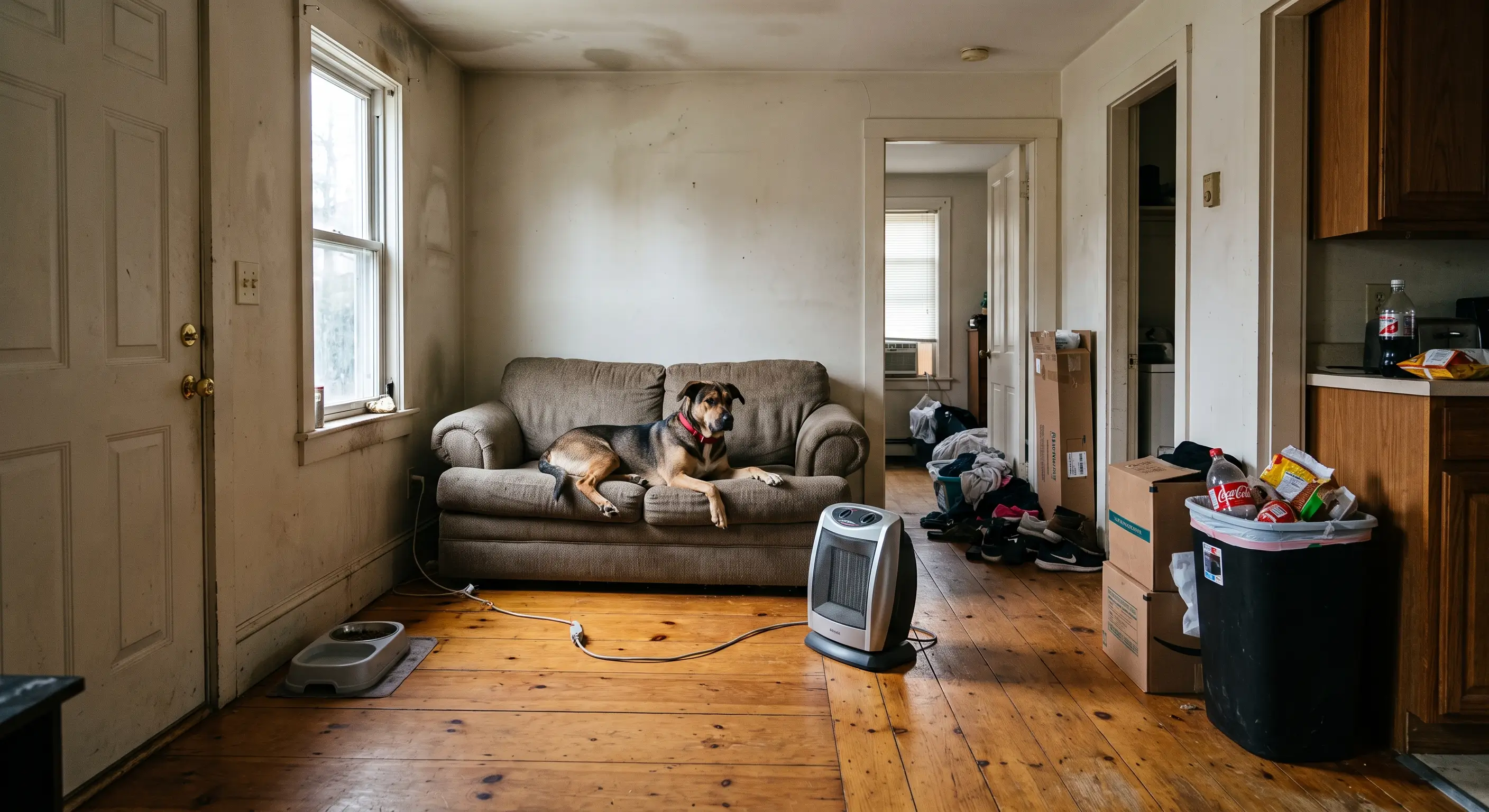
A tenant asks for one extra week to pay rent, and the owner agrees without writing anything down. Six months later, that same tenant is three payments behind, and the owner has no record of when the pattern actually started. PMI Mystic sees variations of this scenario across the area often enough to know it rarely begins as a big problem, and understanding what solid tenant screening actually involves is usually the first place to close that gap.
Key Takeaways
- A single unpaid rent cycle left unaddressed often turns into a formal eviction filing.
- Delayed maintenance requests turn cheap fixes into expensive repairs within weeks.
- Loose screening standards at move-in create problems that surface later in the lease.
- Owners who document every issue in writing hold a stronger position if a dispute escalates.
- Ongoing professional oversight catches warning signs while they're still manageable.
Three Stages of an Unpaid Rent Cycle
Most rent problems don't begin as a crisis. They begin with a single missed payment an owner decides to let go, and from there the situation tends to move through a fairly predictable sequence.
- The first missed payment gets excused verbally. A tenant offers a reasonable explanation, and no written notice or dated record follows.
- A second missed payment becomes routine. The owner is now relying on memory and verbal reminders instead of a documented timeline.
- Formal notice arrives too late. Connecticut's eviction procedures require specific steps in a set order, and skipping the early ones adds real time to a case that should have moved faster. Owners can review our eviction process overview to see what each stage actually involves.
Nationally, landlords filed 1.23 million eviction cases in 2025 across the tracked cities and states, and a large share of those filings trace back to a payment issue that sat unaddressed for months before anyone acted.
When a Maintenance Request Sits Too Long
A work order that waits a few weeks rarely stays a small job. Here's how three common complaints tend to unfold once they've been pushed aside.
A Ceiling Stain Nobody Scheduled
A tenant flags a water mark, and the request gets pushed back week after week. By the time anyone shows up, the drywall has softened, and the fix now involves insulation replacement and a mold check.
A Heating Complaint That Waited Through the First Cold Snap
A tenant reports weak heat in early fall, and the owner figures it can wait until the schedule clears. It doesn't. The system fails during the season's first real cold stretch, turning a routine service call into an emergency dispatch at a much higher rate.
A Slow Drain Left Alone for Weeks
It never feels urgent, so it sits. Water backs up more each time, and the eventual fix involves clearing a fully blocked line rather than a quick treatment that would have solved it early on.
Owners can rely on our maintenance support team to keep requests like these from stalling in the first place.
Screening Shortcuts That Surface Months Later
A rushed application review rarely causes trouble right away. The consequences tend to show up in stages instead.
- Income gets verified loosely, often through a single recent pay stub rather than a full financial picture.
- Non-traditional income sources get waved through without the extra documentation they actually require.
- Red flags noted during the application never get followed up on before move-in.
Each shortcut on its own might look minor, but stacked together they raise the odds of a tenant who struggles to keep up with the lease a few months in. Mystic's renter pool doesn't always follow a traditional income pattern, something our breakdown of rethinking screening for income covers in more depth.
Enforcing Lease Terms: Two Approaches Compared
| Situation | Consistent enforcement | Enforcement left inconsistent |
|---|---|---|
| Unauthorized pet | Addressed in writing within days | Becomes a recurring, undocumented issue |
| Extra occupant | Lease amendment or removal required promptly | Occupancy creeps upward with no record |
| Repeated parking violation | Warning issued, pattern tracked | Tenant assumes the rule no longer applies |
| Noise complaints from neighbors | Logged and addressed directly | Complaints pile up until a neighbor leaves |
Owners who apply the same standard every time tend to keep tenants longer than owners who let small things slide. Mystic's leasing timelines have shifted too, and our piece on rethinking established leasing timelines covers how that shift changes when owners should be enforcing terms in the first place.
The Quiet Cost of Managing Without a System
Owners handling everything solo often don't notice a slide until it's already a real problem. A few gaps show up more than any others.
- Payment history lives in a notebook or scattered text messages, so a missed payment gets forgotten within weeks.
- Maintenance requests come in by phone with no written log, leaving no record of how long an issue has actually been open.
- Lease violations get noticed once and never written down anywhere useful.
- Communication bounces between text, email, and phone calls, with nothing living in one place.
Industry benchmarks show general maintenance requests took a median of 14.8 days to close across the single-family rental sector, and that gap is exactly where an untracked system lets small issues turn expensive. Owners curious where their own properties stand can start with a free rental analysis.
What Consistent Oversight Actually Changes
PMI Mystic tracks payment history, maintenance activity, and lease compliance in one place, so a missed payment or an overdue repair gets flagged while it's still manageable. That kind of tracking is backed by the guarantees we stand behind for every property we manage.
FAQs about Escalation Patterns in Mystic, CT
If a tenant offers to pay a late fee voluntarily, does that change how I should handle the missed payment?
A voluntary late fee doesn't replace formal notice or documentation. Record the missed payment, the fee, and the date paid separately so the underlying pattern still gets tracked even if the tenant is being cooperative about it.
What's the risk of using the same handyman for every repair regardless of the issue?
A generalist handyman can miss underlying problems that a specialist would catch, like a leak that signals a larger plumbing issue. Matching the repair type to the right expertise prevents recurring callbacks for the same complaint.
How specific does a lease need to be about guest stays to avoid disputes later?
Vague language like reasonable guests invites disagreement. Specify a maximum number of consecutive nights and a cap on frequency per month so both parties have a clear, measurable standard to reference if a dispute comes up.
Should I adjust my screening approach for a property that turns over tenants more often than others?
High-turnover properties benefit from a slightly more conservative income threshold, since frequent vacancies already strain cash flow. Tightening that one variable can offset some of the added risk that comes with more frequent tenant changes.
What's a practical way to keep track of which lease clauses get violated most often across a portfolio?
A simple log noting the clause, property, and date each time a violation occurs reveals patterns fast. Owners often find one or two clauses account for most issues, which points to where lease language needs to be clearer.
What Separates a Manageable Issue From a Costly One
A rent notice sent the day it's due instead of a month later. A repair scheduled the week it's reported instead of after a second complaint. A lease term addressed the first time it's broken instead of the fourth. The gap between these outcomes usually comes down to timing rather than effort.
PMI Mystic keeps that timing consistent across every property we manage, catching what tends to slip through when owners handle things solo. Find out where you stand with a look at how your property is currently being tracked.